Schools
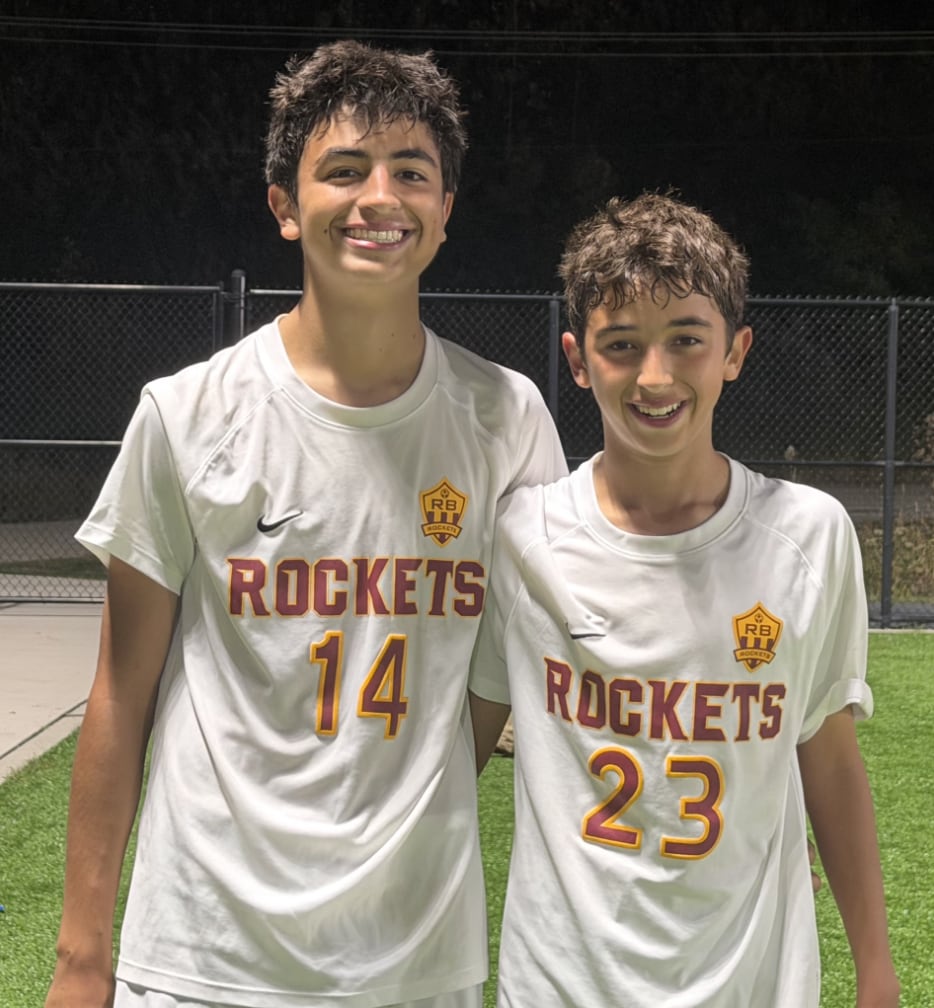
Johann, Oliver Boentges help Richmond-Burton boys soccer reach fourth straight sectional final
By Tommy Nguyen
Advertisement · Why this ad?
With a Bachelor’s degree in Education and Journalism from Loyola University Chicago, Lisa Nguyen has dedicated her career to covering educational issues in the city. She has worked for WBEZ, focusing on local initiatives and reforms affecting Chicago schools.
More from Lisa →
In a surprising turn of events that underscores the delicate balance between free expression and institutional responsibility, Pat McAfee, the dynamic ESPN host and former NFL star, found himself at the center of a campus controversy during a recent visit to the University of Utah. Students, in what was intended as casual commentary, mocked him as 'corny' and 'creepy,' remarks that were then amplified on the university's official Instagram account. This incident quickly prompted a swift and sincere apology from the institution, highlighting the complexities of public perception in the digital age and the profound impact social media can wield.
The University of Utah formally apologized to ESPN host Pat McAfee after its official Instagram account published student remarks that disparaged him. The footage, which captured students labeling McAfee as 'corny' and 'creepy,' was subsequently deleted, but not before it sparked a significant reaction from the prominent sports media personality and initiated a broader conversation about campus decorum and institutional platforms.
The controversy began during McAfee's assignment in Salt Lake City with the GameDay crew. While preparing to showcase the university, McAfee learned that its official Instagram had featured students making moderately disparaging comments about him. The footage, though later removed, quickly caught the attention of the former Indianapolis Colts punter, who expressed his disappointment not with the criticism itself, but with the university's role in disseminating it.
Speaking on The Pat McAfee Show on Monday, McAfee recounted the specific remarks: "One kid goes, 'Ah, he’s corny.' Another kid calls me creepy." He clarified his stance, stating, "OK if these kids would have done this on their own blogs, all good. I mean, everybody’s taking shots at me anyways for everything; I get it." However, the crucial distinction for McAfee was the official endorsement: "The university puts that out. Like, as I’m about to go out and do an infomercial for the place, and then I’m walking in front of thousands of these people. This is how the university feels about it. It’s an uncomfortable feeling." This sentiment resonated with many who believe that institutional platforms carry a greater weight of responsibility.
The University of Utah quickly moved to address the situation, issuing a public apology via social media. Their statement read: "We sincerely apologize for creating any perception that Pat was unsafe or unwelcome on our campus. Nothing could be further from the truth. Pat and the entire GameDay crew are always welcome at the University of Utah and we deeply appreciate the opportunity ESPN provides to showcase our university and community." This swift response aimed to quell the growing concern and reaffirm the university's commitment to hospitality.
McAfee's concern extended beyond personal offense, touching upon broader issues of campus safety and the potential amplification of negativity. He alluded to a past incident, asking, "I thought to myself, did something else happen pretty scary at a college gathering in the state of Utah recently? Like, should we be amplifying reasons why people hate my guts? So I don’t know, it was a lot of mixed feelings." This was a clear reference to the significant protests and security concerns surrounding right-wing provocateur Charlie Kirk at Utah Valley University in Orem on Sept. 10 last year, highlighting the sensitive nature of public discourse on college campuses.
This incident also brought to light McAfee's own history as a polarizing figure in modern sports media. Last year, he was compelled to apologize to a University of Mississippi student after he amplified a false rumor regarding her personal life. Such past events underscore the challenges public figures face in navigating the media landscape and the constant scrutiny under which they operate. It also serves as a reminder that words, especially when broadcast widely, carry significant weight and can have unintended consequences.
For any community, especially one centered around a major educational institution, fostering an environment of respect and mutual understanding is paramount. The University of Utah's apology reflects a commitment to these values, acknowledging that while student expression is vital, the university's platform should be used to uplift and welcome, rather than to disparage. This commitment is crucial for maintaining a positive campus climate, where students, faculty, and visitors alike feel valued and secure.
The incident serves as a valuable teaching moment for students about the power of their words and the reach of social media. In an increasingly interconnected world, what might seem like a casual comment can quickly escalate, impacting individuals and institutions. It reinforces the importance of thoughtful communication and the understanding that public platforms, even those managed by student bodies, represent the broader values of the university.
In our own communities, we understand the importance of strong, supportive environments, whether within families or larger institutions. Universities, much like families, are foundational pillars that shape the next generation. Ensuring that these environments are built on respect, open dialogue, and a sense of belonging is essential for the holistic development of young adults and for upholding the American dream of stable, thriving communities. The university's prompt action in this matter demonstrates a dedication to these principles, ensuring that their campus remains a place of learning and growth, free from undue negativity.
The resolution of this particular incident, with the university's apology and McAfee's acceptance, demonstrates a path forward for addressing such challenges. It highlights the importance of accountability and the willingness of institutions to rectify mistakes. For the NCAA sports world, where universities frequently host high-profile media events, this serves as a precedent for managing interactions between students, media personalities, and institutional platforms.
As college football continues to captivate audiences across the nation, the visibility of campuses and their student bodies will only grow. This incident underscores the ongoing need for universities to educate students on responsible digital citizenship and for institutions themselves to carefully curate their public messaging. The goal remains to celebrate the vibrant spirit of college life while upholding standards of respect and professionalism.
The University of Utah, like many esteemed institutions, strives to be a beacon of learning and community. This event, while initially challenging, ultimately reinforced the university's dedication to creating a welcoming atmosphere for all who visit, including prominent figures like Pat McAfee. It's a testament to the fact that even in moments of public scrutiny, a commitment to core values can guide institutions toward positive resolution and continued growth, fostering an environment where every individual, from a student to an NFL veteran turned media star, feels respected and heard. The incident, as reported by outlets like the Associated Press and USA Today, serves as a reminder for all institutions to remain vigilant in their public communications.
By Tommy Nguyen

By Clara Robinson

By Lisa Nguyen

By Mark Chen